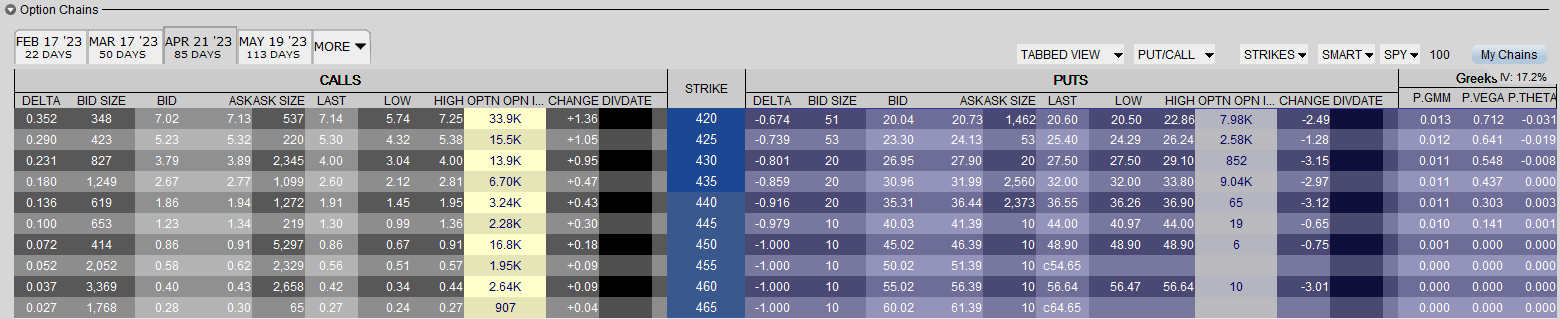
A couple of days ago I placed a limit order to sell naked (uncovered) calls on Shutterfly (SFLY). I’ve profited on SFLY calls twice in the past few months doing the same thing and figured little has changed for it’s near term future and dove back in for more. While SFLY was trading at $15.67, I sold four June 17.50 naked calls (QFYFW) and received $307 after commissions.
Covered calls are a lot more popular because the risk is perceived to be lower, but that’s not 100% true. The upside risk is much lower, but the downside risk is much better by not taking ownership. I think that SFLY could fall lower than its current price, so I am not taking ownership of the underlying stock and therefore am not taking on the downside risk. I am accepting risk to the upside in that SFLY could climb to 25, 50, 100 or any higher price, but I just don’t think that’ll happen. If SFLY climbs above 17.50 by options expiration, I’ll be forced to sell 400 shares which I don’t own, essecially I’m shorting the stock now, but with a cushion and a limited profit.
Hi,
I enjoy reading your blog as I am trying to learn options strategies to try with real money someday. One question – have you ever been assigned a stock on any other day than on / after expiration day?
It can NEVER happen after expiration day because the option has already expired as in the contract you agree to is now worthless. It’s rare before expiration day, but happens sometimes. Here’s where I wrote about it happening on NVDA to me a couple months ago – http://mytradersjournal.com/stock-options/2008/02/15/nvda-option-assignment/.
Here’s where it happened to me on Boeing (BA) last November – http://mytradersjournal.com/stock-options/2007/11/14/option-assignment-boeing-co-ba/
It tends to happen when an option gets deep in the money (typically because you’ve sold at a bad strike as in my two examples), but that’s not a guarantee. The benefit to the naked put writer is that you can immediately write (sell) a covered call on the new shares you own rather than having to wait until options expiration. Basically it gives you extra time value to sell.
Thanks for your response. What would you estimate is the percent of time that an option contract is exercised against you whether it be for the puts or calls you’ve written?
As an unchecked answer, I’d GUESS on covered calls it’s 80+% since I generally write them in the money, meaning the strike is lower than the current price of the stock and if the stock stays flat or goes up it gets called away. For puts it’s maybe 10-15% since I write out of the money, meaning the strike is also lower than the current price of the stock and if the stock stays flat or goes up I get to keep the premium and never have to buy the stock. Actually either way I get to keep the premium. It’s just if I take a loss on the stock with it or not. Aside from January of this year my % were evenn better than that. My goal is to not have stocks assigned, but play is smart enough to have the cash ready if they do.